CHALLENGE
In the case of telco operators, choosing the best location is also as important as offering the best network. Our retail site optimization solution enables telco retail managers and Real Estate organizations to use best-in-class location data. The increase in earnings was just one consequence of all the work that went into it. First step:
- Find optimal locations to open flagship stores, stores, kiosks, …
- Make more accurate revenue predictions for existing and new sites.
- Quantify the impact of competitors in your retail network.
- Reduce risks of underperforming investments in retail space.
- To make it possible, Locatium had the following challenges in arrival the goal of increasing store touchpoint-related sales by 50% with the minimum number of new store locations:
- Despite the increase in online channels, physical stores remain strategic for growth potential. Our customer doesn’t know and doesn’t have data to answer questions such as:
- Market share in micro markets.
- Market potential by segment.
- Importance of physical stores for each of the segments.
- Type of stores (flagship stores, convenience stores, kiosks, pop-up stores, etc.) suitable for each segment.
- Optimal locations for each of the store types.
- Sales forecast for each of the proposed new store locations by store type.
- Increasing overall market share by growing segments with higher growth potential (in volume and in ARPU)
PROJECT DEVELOPMENT AND THE FINAL SCORE
To solve it we did it by deploying Locatium Telco Growth Platform, we helped our customer answer these questions:
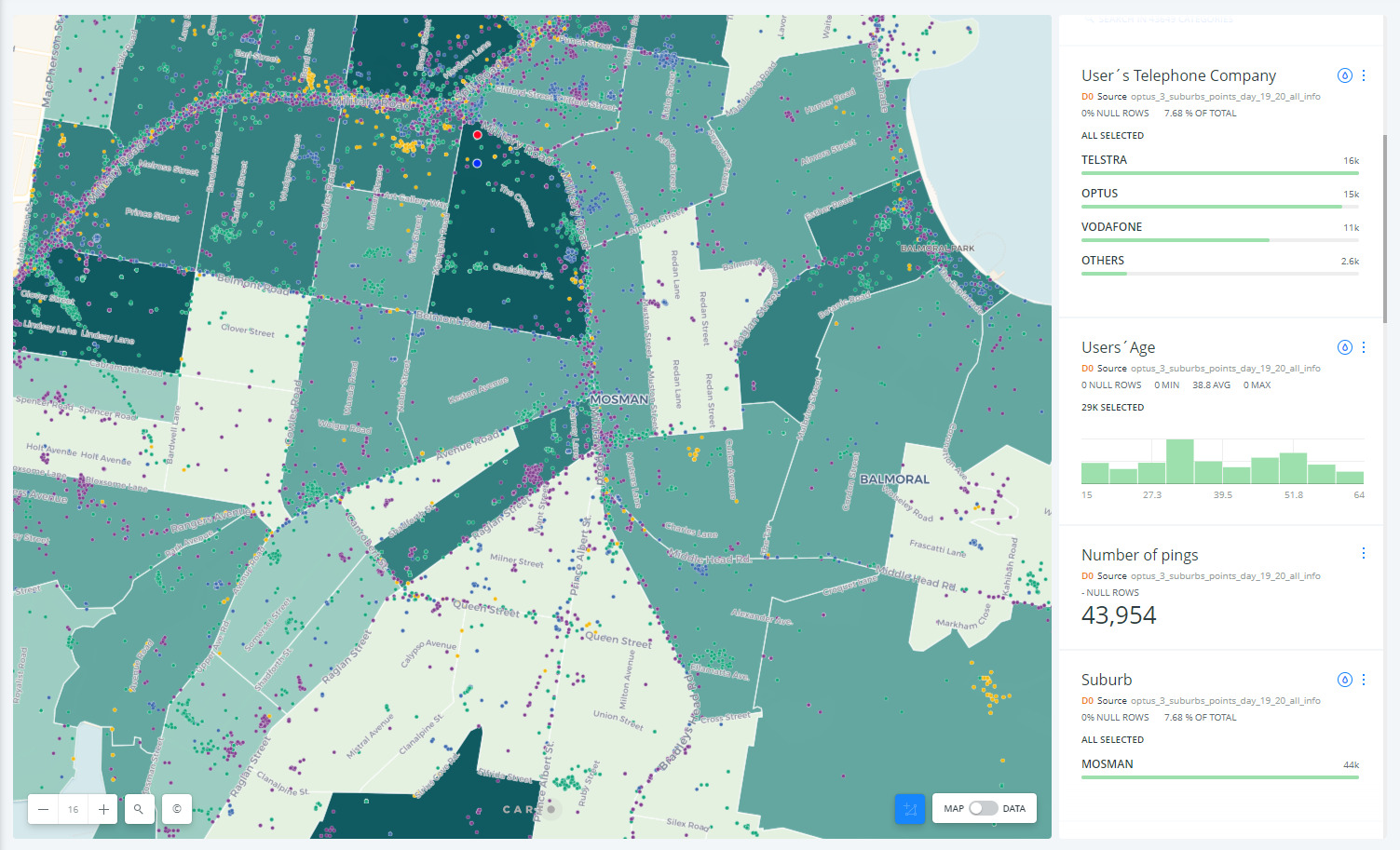
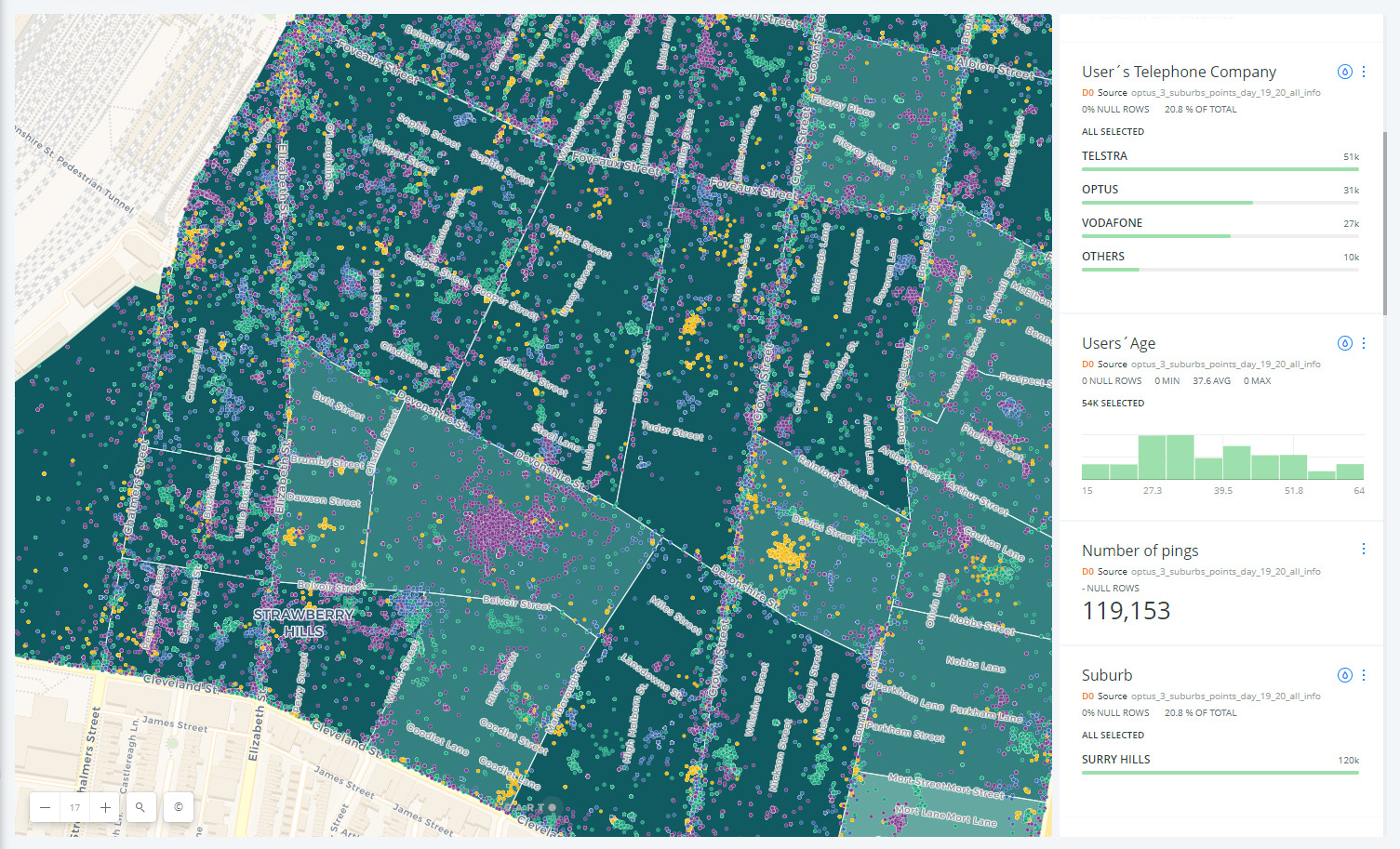
- Market share (visiting population, residential population, and working population) in micro markets.
- Identifying micro markets with high uplift potential by analyzing internal CRM sales data, and Locatium mobility and consumer datasets.
- Identify catchment areas of each of the current stores.
- Using Locatium’s retail optimization engine to identify optimal locations for Flagship stores, Small stores, Kiosks, Pop-up stores, and Experimental stores.
- Executing overall growth strategy by actioning on the answers above.
- For making his solution possible, we bring this data uses into the model:
- Census date – Population, household information, and socioeconomic group information.
- Retail catchment data – Classified retail catchment areas.
- POI data – Commercial points of interest locations, the size range of each store.
- Credit Card Insights -Mastercard MRLI sales, ticket size, growth score Human Mobility – Socioeconomic status, traveler Vs resident, age, home location, work location, habits (600+ attributes)
- Traffic and Mobility – oad transit, road category, start-prone area, drop off-prone area.
- Real Estate – Price per sqm, rooms per unit, construction year, building density.
- At the end of the project we were able to:
- Calculated market share of residential population, working population and visiting population in 57,523 micro-markets all over the country.
- Identify right store locations for 250 stores with maximum commercial potential broken down by segment. Matching these 250 locations with optimal store format (flagship, conventional, pop-up, experimental,…)
- Increased store touch point-related sales from $62m to $93m by opening 62 new stores (39% of the original 158 stores)